


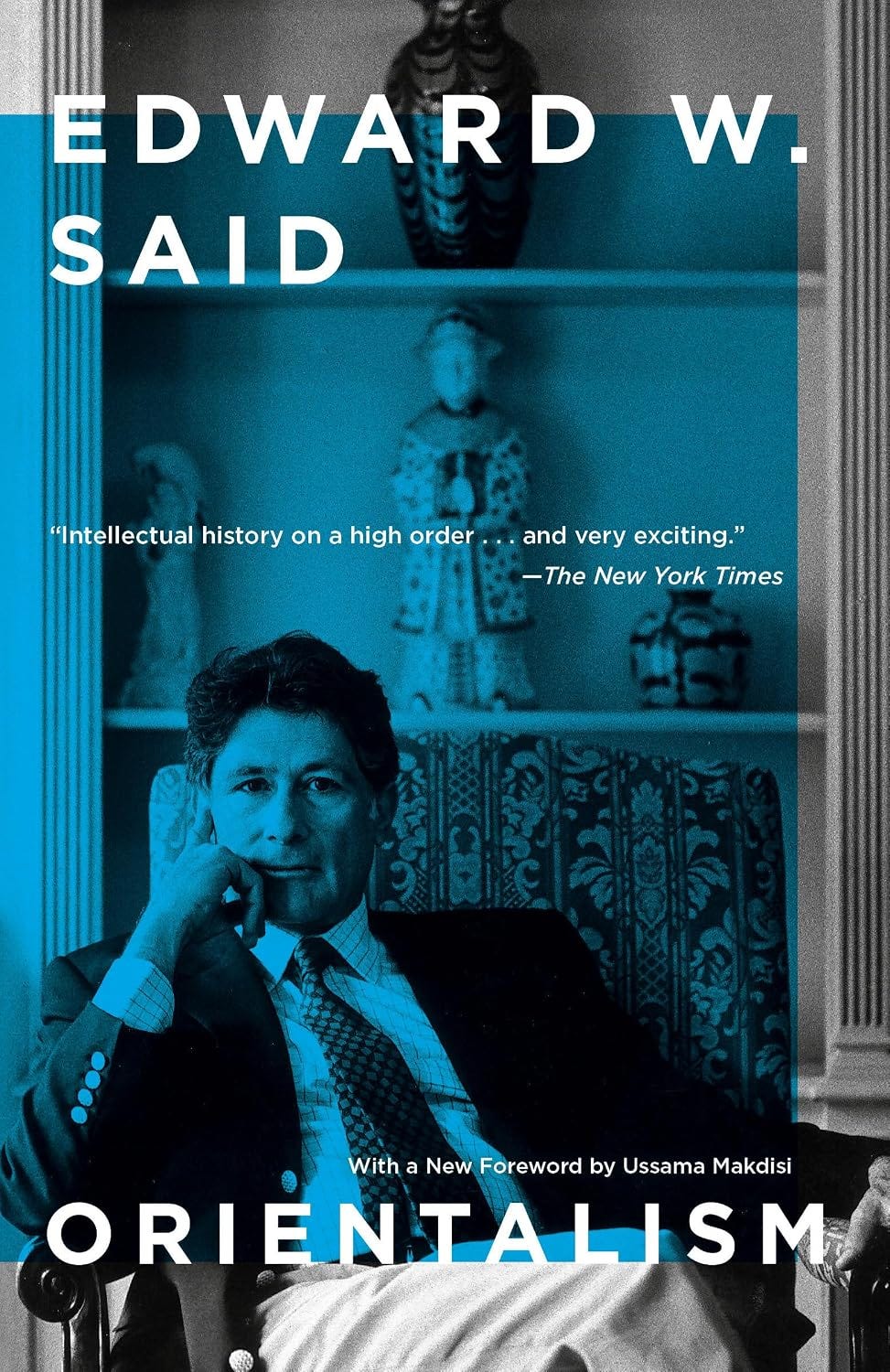
We like to think of knowledge as a mirror held up to the world. Edward Said’s Orientalism, published in 1978, is the great modern demonstration that the mirror can be shaped, and that it usually is. Surveying centuries of European scholarship, literature, and art about the East, Said shows that “the Orient” they described was less a place than an invention: a portrait of exotic, sensual, despotic, unchanging peoples, painted by outsiders and mistaken for a likeness. And the distortion, he argues, was not scholarship’s failure but its function. This knowledge was produced alongside empire and put to work justifying it.
I recommend the book because its lesson transcends East and West. Histories, textbooks, newspapers, and judicial opinions all speak in the confident voice of fact, and all are written by someone, from somewhere, often in service of something. When the Supreme Court in Reynolds waved polygamy away as “almost exclusively a feature of the life of Asiatic and of African people,” it was not stating knowledge but manufacturing it. Said trains his readers to notice the difference. Nearly fifty years on, it remains the rare book that changes how its readers read everything else.