


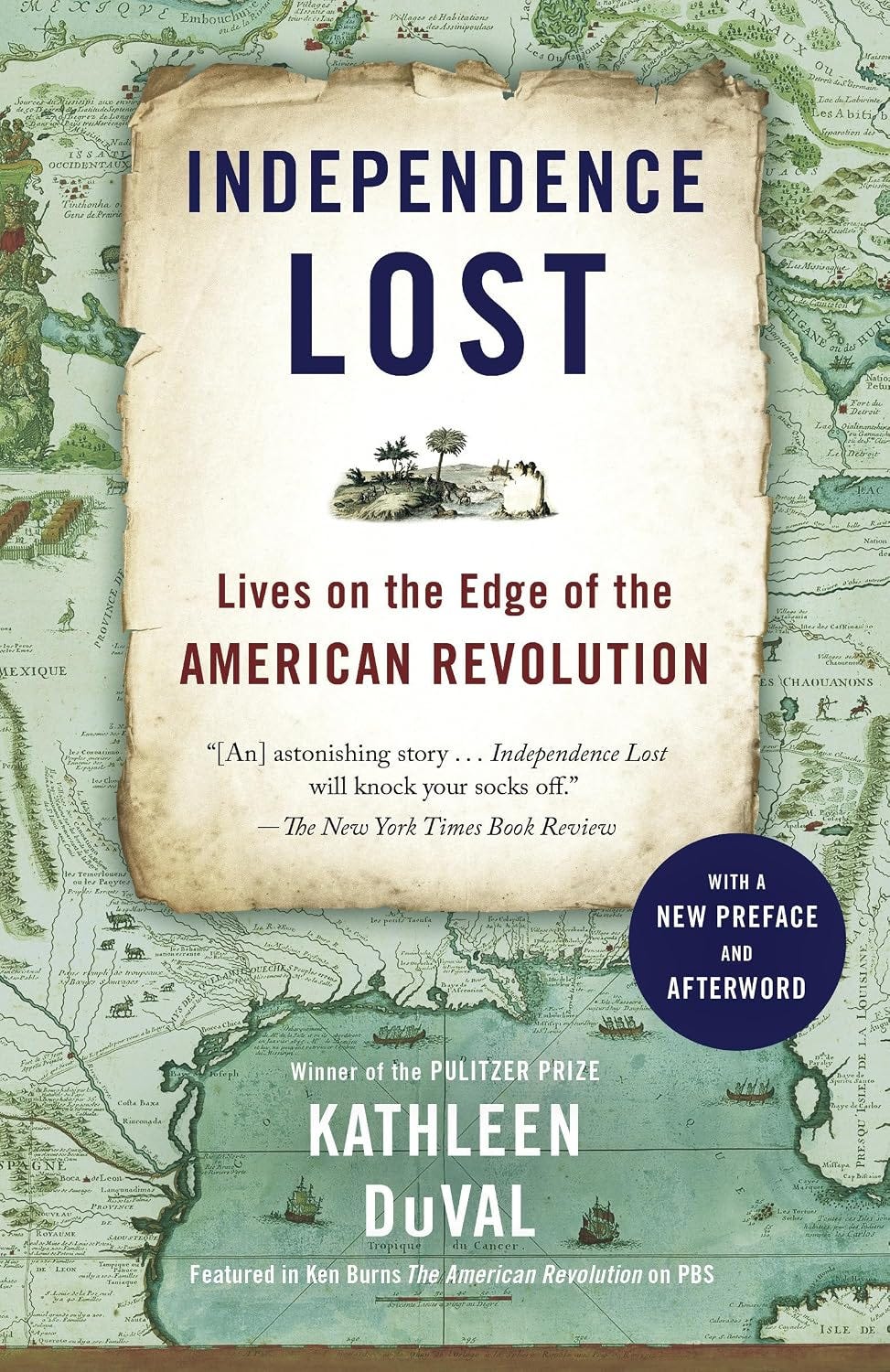
The American Revolution comes with a familiar cast: Boston, Philadelphia, minutemen, founders. Kathleen DuVal’s Independence Lost, published in 2015, walks off that stage entirely and heads for the Gulf Coast, where the same war was fought by people most tellers never mention: a Chickasaw peace chief, a Creek diplomat, an Acadian exile, an enslaved cattle drover, a loyalist couple in Pensacola, an Irish merchant bankrolling the rebels, and the Spanish general who seized Pensacola. Told from their ground, the Revolution stops looking like a shared march toward liberty and starts looking like what it was for most of the continent: an imperial war whose outcome upended every existing arrangement.
DuVal’s sharpest point is about the word itself. Many of her subjects did not want independence at all. They wanted interdependence, the webs of alliance, kinship, and trade that kept them safe, and the new republic’s independence was precisely what tore those webs apart. I love this book because it does what my research aspires to do: it questions the victors’ narrative not by scolding it but by widening the frame. You will not think about 1776 the same way again.